City of Gaza. –. Rakan Abdelrahman, a freelance journalist, reports on Israel’s bombing of the Gaza Strip while working out of a cafe. He is prepared to leave immediately if necessary and is wearing a vest with the word “press” on it.
However, Abdelrahman is not merely reporting on a story. His work has appeared in Middle East Eye and The National. In spite of obstacles that could hinder their work, Palestinian journalists in the Gaza Strip like Abdelrahman are attempting to overcome the odds and even death in order to expose the horrors of war.
Israeli warplanes have been relentlessly bombing the coastal enclave for ten days, killing 2,808 Palestinians, including a quarter of children. The interior ministry reported on Monday that 10,859 additional people have been injured as a result of aerial bombardments. more than a thousand Palestinians’ dead. are hidden beneath the wreckage of bombed-out buildings.
Israel bombed the communications tower in the occupied territory last week and. snuff out the electricity. to the sole power source for the strip. These actions are a part of Israel’s “total siege” in response to the surprise attack by Hamas fighters on Israeli military bases and surrounding Israeli towns and settlements outside of the Gaza Strip on October 7. The attack claimed at least 1,400 Israeli lives.
In the Gaza Strip, there is no reliable electricity or internet service due to bombings and the siege. As a result, the already hazardous and difficult work of journalists in a war zone has become even more difficult.
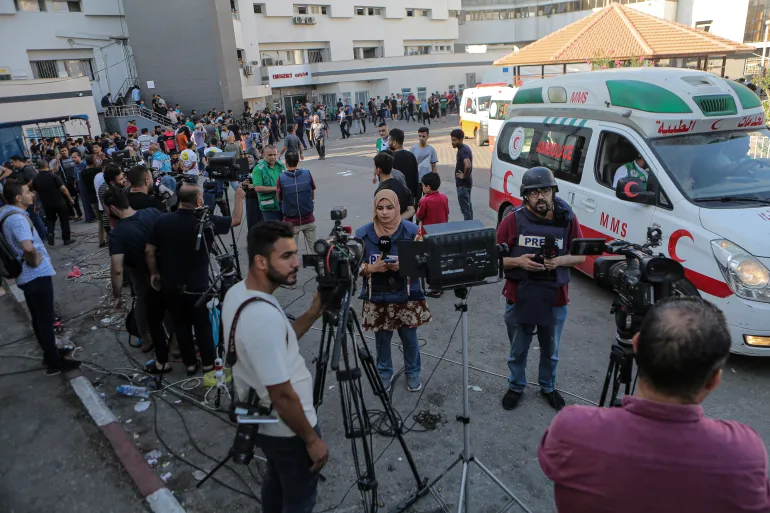
We are unable to provide real-time reporting due to poor internet connections and power outages. According to Abdelrahman, who also adds that journalists wearing visibly marked press vests and helmets have been attacked, there is no appropriate location from which to conduct business.
At least 11 journalists have reportedly been attacked, according to the Committee to Protect Journalists (CPJ). has already died. has been there since October 7.
For fear of another Israeli attack on the same location, Abdelrahman says, “We can’t even get to the places that have been bombed or cover the sites of massacres.”. You are at risk every single second. Saeed al-Taweel, Mohammed Subh, and Hisham Alnwajha are just a few of our coworkers who have paid the price with their lives. ”.
The three journalists were. on October 10 killed. after going outside to capture footage of a building in Gaza City that was about to be bombed. Despite the fact that they were all hundreds of meters away from the Hiji building, which was the attack’s intended target, the other building that was hit by the airstrike was much closer to them.
Residents of the 2.3 million-person Gaza Strip, more than half of whom are under the age of 18, claim that the current conflict is the fiercest of the 15 years’ worth of offensives. There have been at least 1 million internal displacements.
In addition to fearing for his life while reporting, according to Abdelrahman, he is also preoccupied with worries about his family and his four children.
He says, “I consider their psychological state of mind, their exposure to this horrifying war.”. “They weren’t old enough to remember the previous Israeli wars, but now that they are, it’s been very hard for them and for me to see the fear that’s engulfed them,” the speaker said. ”.
Being a journalist in the Gaza Strip means having to balance these two fears, according to Ghazi al-Aloul, a correspondent for Jordan’s al-Roya TV channel.
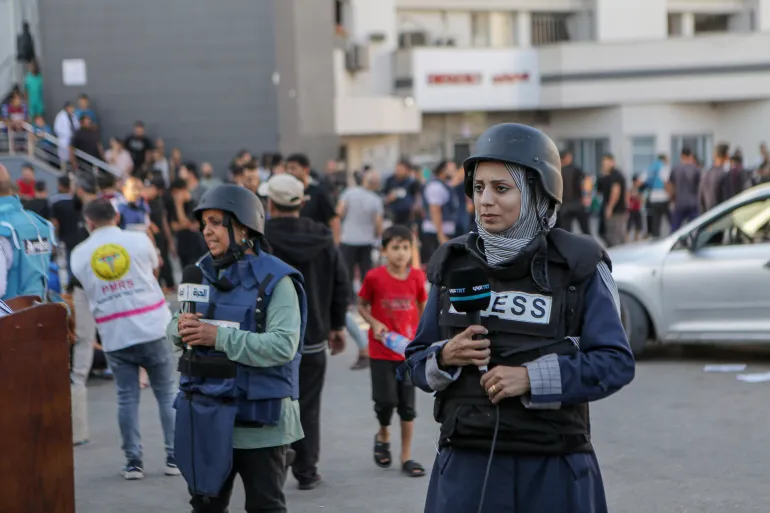
According to the newspaper al-Roya, his family, which included his wife who is pregnant and their young daughter, aged three, survived an Israeli attack on the building where they were staying on Sunday in Rafah, in the southern Gaza Strip. reported.
Of course, you’re conflicted between your duty as a journalist to tell the truth and the risks involved and what your family is going through, says al-Aloul. I believe we have grown accustomed to these pressures. Regardless of the challenges we face, we will always continue working. ”.
We always try to convey that as much as possible in our coverage, he continues, because “we all know that Israel acts with total impunity and disregard for international law.”.
Many journalists are not working from their media offices due to the lack of internet and electricity. As an alternative, they congregate in any open cafe where they can confirm information and submit their reports.
In spite of operating on generators, the Shifa Hospital in Gaza City has developed into a gathering place for reporters and journalists by providing them with a chance to charge their phones.
The dead and injured arriving from the various Israeli-bombed areas also gives them access to information they would not otherwise have because of the lack of electricity and disruption to mobile phone networks.
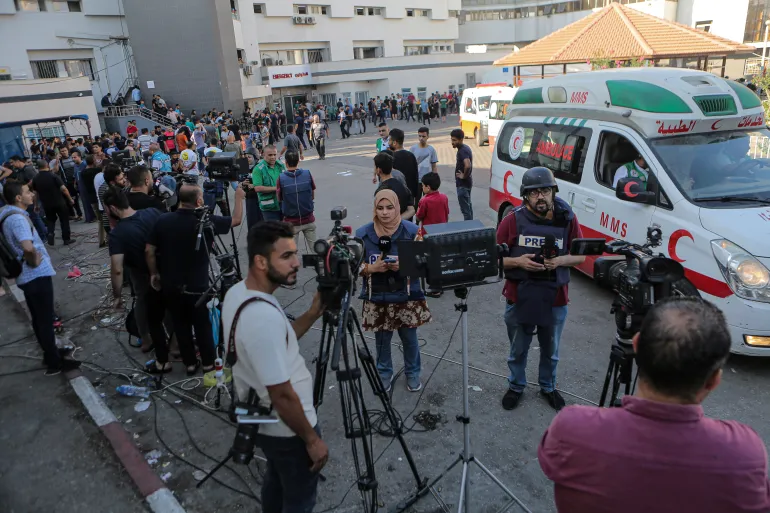
According to Shorouq Shaheen, a correspondent for Syria TV, when there is no internet, the journalist is subject to censorship because they are unable to report on information or news in various areas of the Gaza Strip.
We are still covering the news, but our coverage has been curtailed, she claims. When the injured and deceased arrive at the hospital, we find out the location of an Israeli airstrike. How can we immediately cover those attacks, though, that occur in locations where we are unable to reach them?
Al-Aloul acknowledges that reporters are aware of the danger to their lives and that “there’s a chance we could end up being the news instead”.
But he adds that the passing of their coworkers only “gives us more motivation to carry on working in their names and memories.”.
Al-Aloul continues, “We, as journalists, have always shown that we are up to the task. We are steadfast in demonstrating the atrocities Israel is committing against us. ”.
.